Landscape Restoration – Sunkoshi Basin in Nepal

Join our mission to restore the Sunkoshi Basin in Nepal, where your contribution directly supports reforestation efforts, biodiversity preservation, and community empowerment. Each tree planted helps combat climate change while improving livelihoods in rural communities.

Project Description

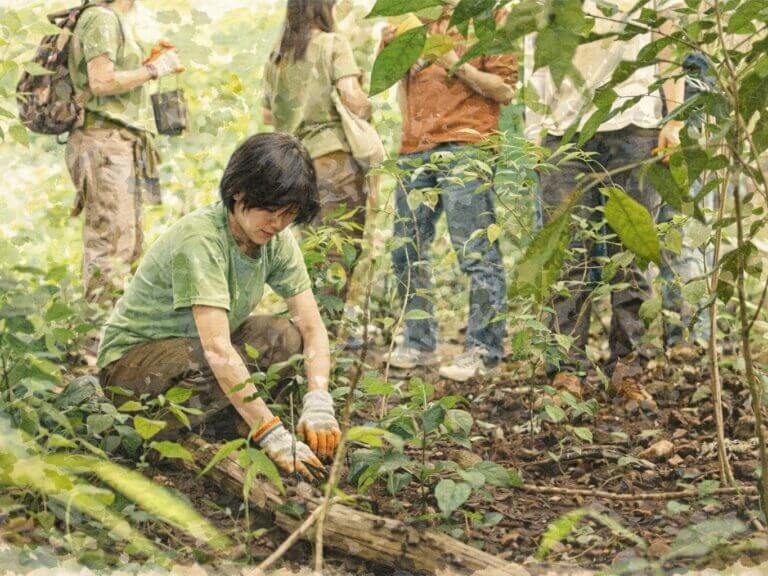
The Sunkoshi Basin Restoration Project is a transformative initiative aimed at restoring degraded forests, improving biodiversity, and strengthening local communities in Nepal. Nestled in a region known for its dramatic landscapes and rich cultural heritage, this project is essential for mitigating environmental risks and fostering sustainable livelihoods.

By planting native and agroforestry species, we aim to create thriving ecosystems that provide critical services such as water recharge, soil stabilization, and natural disaster mitigation. This restoration project also focuses on empowering local communities, offering fair-wage employment, and promoting inclusive decision-making, particularly for women.

Key Highlights:

  • Restoration of forested landscapes in areas vulnerable to landslides and erosion.
  • Support for community-led forest management plans to ensure long-term sustainability.
  • Biodiversity enhancement to protect endangered species like the Bengal tiger and snow leopard.

Your contribution to this project not only plants trees but also nurtures a better future for people and the planet. Together, we can make a lasting impact on the environment and improve lives in the Sunkoshi Basin.

SDG Goals

UN SDG 1
UN SDG 2
UN SDG 3
UN SDG 5
UN SDG 8
UN SDG 10
UN SDG 13
UN SDG 15
UN SDG 17

Why this reforestation project contributes to these UN SDGs

This forest restoration project strengthens community-managed forests in Nepal’s mid-hills by improving forest quality, biodiversity, and resilience to climate-related risks. By enhancing ecosystem health and protecting critical forest corridors between protected areas, the project supports climate adaptation and ecosystem restoration (SDG 13 and SDG 15).

Through agroforestry development and improved forest governance, the project helps secure sustainable livelihoods and food resources for rural communities, contributing to poverty reduction and food security (SDG 1 and SDG 2). Health and wellbeing are indirectly improved by reducing disaster risks such as landslides and forest fires, and by safeguarding forest-based ecosystem services essential to local populations (SDG 3).

The project is built on inclusive community forest governance, working with diverse local groups and ensuring equitable participation, including the involvement of women in forest user groups and decision-making processes. This approach promotes gender inclusion and helps reduce social and economic inequalities across communities (SDG 5 and SDG 10).

By strengthening local institutions, supporting sustainable employment in forest management, and improving long-term economic resilience, the project contributes to decent work and inclusive economic growth (SDG 8). Its success relies on strong partnerships between community forest groups, local authorities, and conservation stakeholders, directly supporting effective collaboration for sustainable development (SDG 17).

In summary, by combining ecosystem restoration, community-led governance, climate resilience, and inclusive partnerships, this project delivers lasting impact across nine interconnected UN Sustainable Development Goals.

Additional Project Insights

This project focuses on restoring the Sunkoshi Basin in Nepal, a vital area for biodiversity, water resources, and community livelihoods. The region spans diverse ecosystems, from mountainous forests to alluvial plains, and supports endangered species like the Bengal tiger and snow leopard. By working closely with Community Forest User Groups (CFUGs), this initiative promotes sustainable forest management while addressing local socioeconomic challenges.

Key Objectives:

  • Reforest degraded land to combat climate change and improve biodiversity.
  • Strengthen community engagement and foster sustainable livelihoods.
  • Mitigate natural disaster risks through ecosystem restoration.

This project delivers significant benefits for both the environment and the people of Nepal. Restoring the forests of the Sunkoshi Basin enhances ecosystem services like water recharge, biodiversity protection, and climate regulation. Beyond environmental gains, the initiative transforms local livelihoods. By offering fair-wage employment, the project reduces poverty while fostering economic independence. Women play a central role, with more than half of the workforce made up of women, contributing to greater gender equity and community well-being.

The project takes a holistic approach to restoration, focusing on reforestation, community involvement, and advanced monitoring techniques. Native and agroforestry species are planted to improve biodiversity while providing resources like food and timber for local communities. Technical support and training are offered to CFUGs, helping them manage their forests sustainably. Monitoring efforts, including drone mapping and biodiversity surveys, ensure that progress is tracked effectively, enabling continuous improvement in forest management.

At the heart of this project is the empowerment of local communities. Residents are employed for planting and nursery work, creating a sense of ownership over the restored forests. Training programs in sustainable agriculture and forestry equip communities with the skills needed to manage their environment. Women’s participation is strongly encouraged, with leadership roles and employment opportunities helping to foster equality. These efforts contribute to stronger, more resilient communities that are deeply connected to the land they protect.

This project has made remarkable progress since its inception. By partnering with local communities, we’ve created measurable improvements for both people and the environment.

Key Achievements:

  • Over 3.4 million trees planted across 2,000 hectares of land.
  • Establishment of sustainable income sources for 8,000+ workers.
  • Reduction in forest fire occurrences and natural disaster risks.

Looking Ahead:

  • Plan to restore an additional 30,000 hectares of degraded land.
  • Expand agroforestry programs to benefit more households.
  • Achieve long-term sustainability by integrating non-timber value chains.
Project ID: 1960.
Carbon Offset Per Tree: 50 kg.
Trees per hectare: 1600.
Published: 1 year ago.
Last updated: 2 months ago.

Project Location

Photo Gallery

Price per tree: 2,00  per tree
2 €
1 tree
CO₂ Contribution: 50 kg
10 €
5 trees
CO₂ Contribution: 250 kg
20 €
10 trees
CO₂ Contribution: 500 kg
40 €
20 trees
CO₂ Contribution: 1 t
100 €
50 trees
CO₂ Contribution: 2,5 t
200 €
100 trees
CO₂ Contribution: 5 t
-
+
Want to plant more trees? Explore options.

Customer Reviews

“I gifted my sister a few trees along with a plane trip I had planned for her. She’s very eco-conscious, so I wanted to make sure the trip felt a bit more balanced in terms of impact. She loved the idea, and the fact that she could see where the trees would be planted made it even more meaningful!”

“We chose Bloomy Earth to gift trees to our clients as part of our sustainability initiative, and it was a huge success! The certificate they provide is beautifully designed, and sharing it on LinkedIn allowed us to showcase our commitment to the environment in a professional yet heartfelt way.”

support local communities
You’re one click away from planting a real tree — for free.

Create your free account and we’ll plant one tree in your name today. No credit card. No subscription. Just a measurable, shareable impact.